Smart Control Hardware
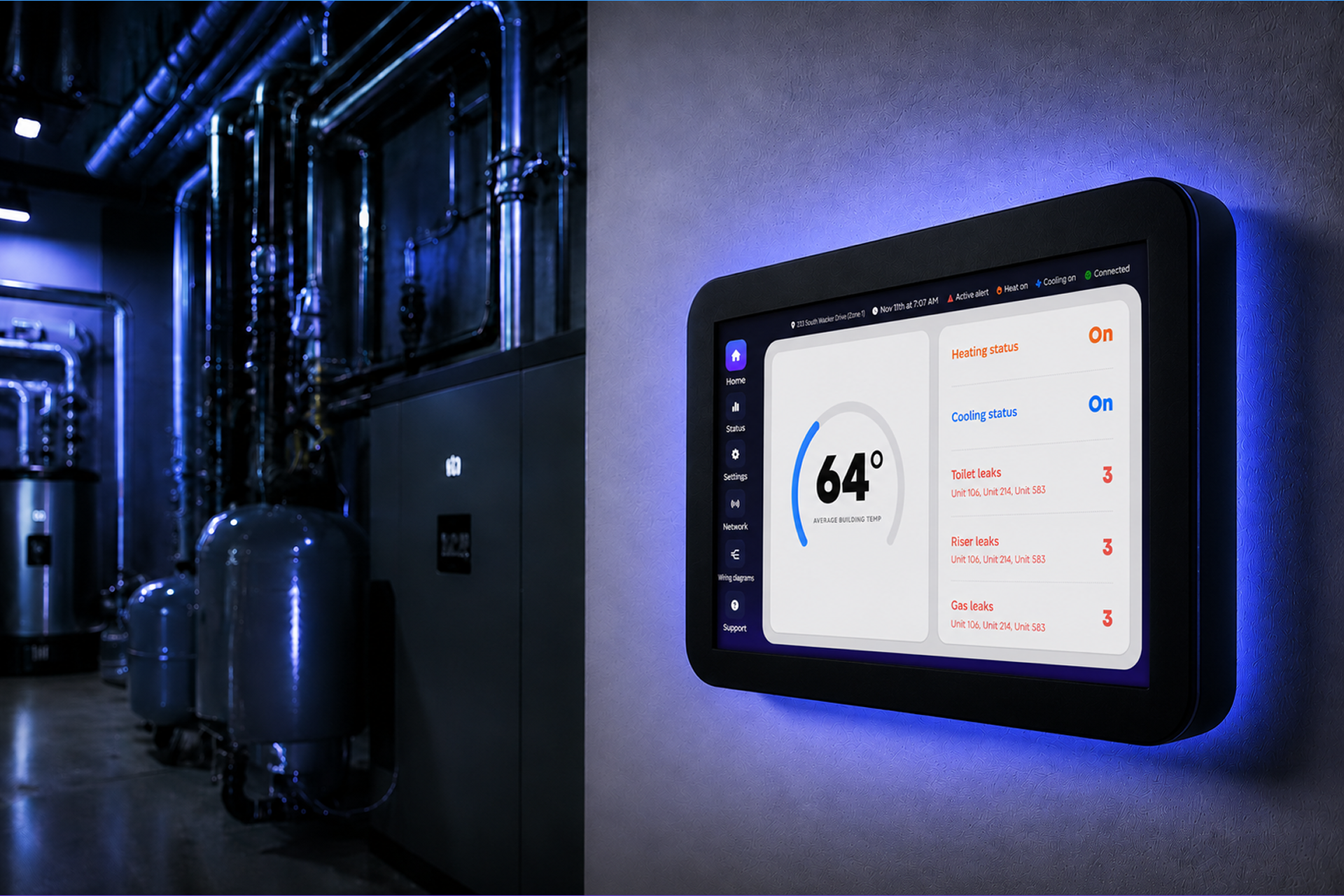
Runwise helps buildings control their heating, cooling, and safety across thousands of buildings through one system. The Smart Energy Box is the brain of the ecosystem that anchors it: a wall-mounted control that replaced aging legacy equipment and became the on-site brain for heating control, leak detection, and backed by a custom wireless network that connects everything.
The Challenge
Legacy hardware capped what the system could do
Runwise's earlier controllers were expensive to install and limited to only heating. Buildings are unforgiving environments: pre-war walls block traditional wireless protocols, boiler rooms are crowded and improvised, and the battery-powered sensors scattered across a property have to stay connected for years on a single charge to scale.
To grow from a heating product into building safety and cooling, the hardware, and the experience standing in front of it, had to be rebuilt for reliability and scale, without raising the cost or the skill required to install it in.
The Strategy
Make the control the single source of truth
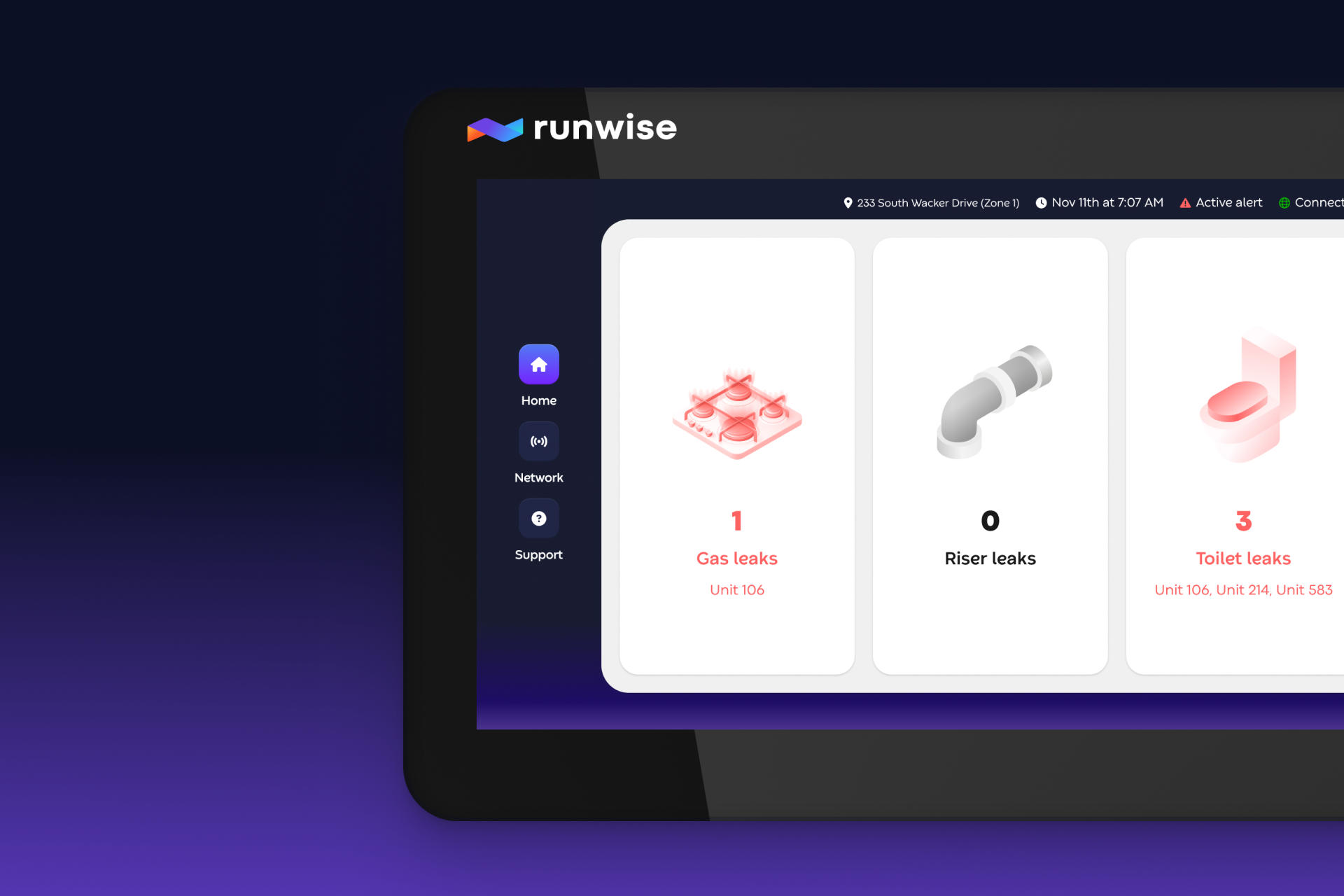
I led product development across eight smart building hardware products and their software and firmware, organized around one idea: every system in the building should report to a single control surface. That meant consolidating heating, cooling, and four new safety services (gas, toilet, and water riser monitoring) onto one screen.
Two bets made it work at scale: a proprietary IoT mesh network so battery powered devices could stay connected for 10 years building-wide through heavy construction, and guided software that takes cost and specialized labor out of every install.
The Solution
One screen for heating, cooling, and safety
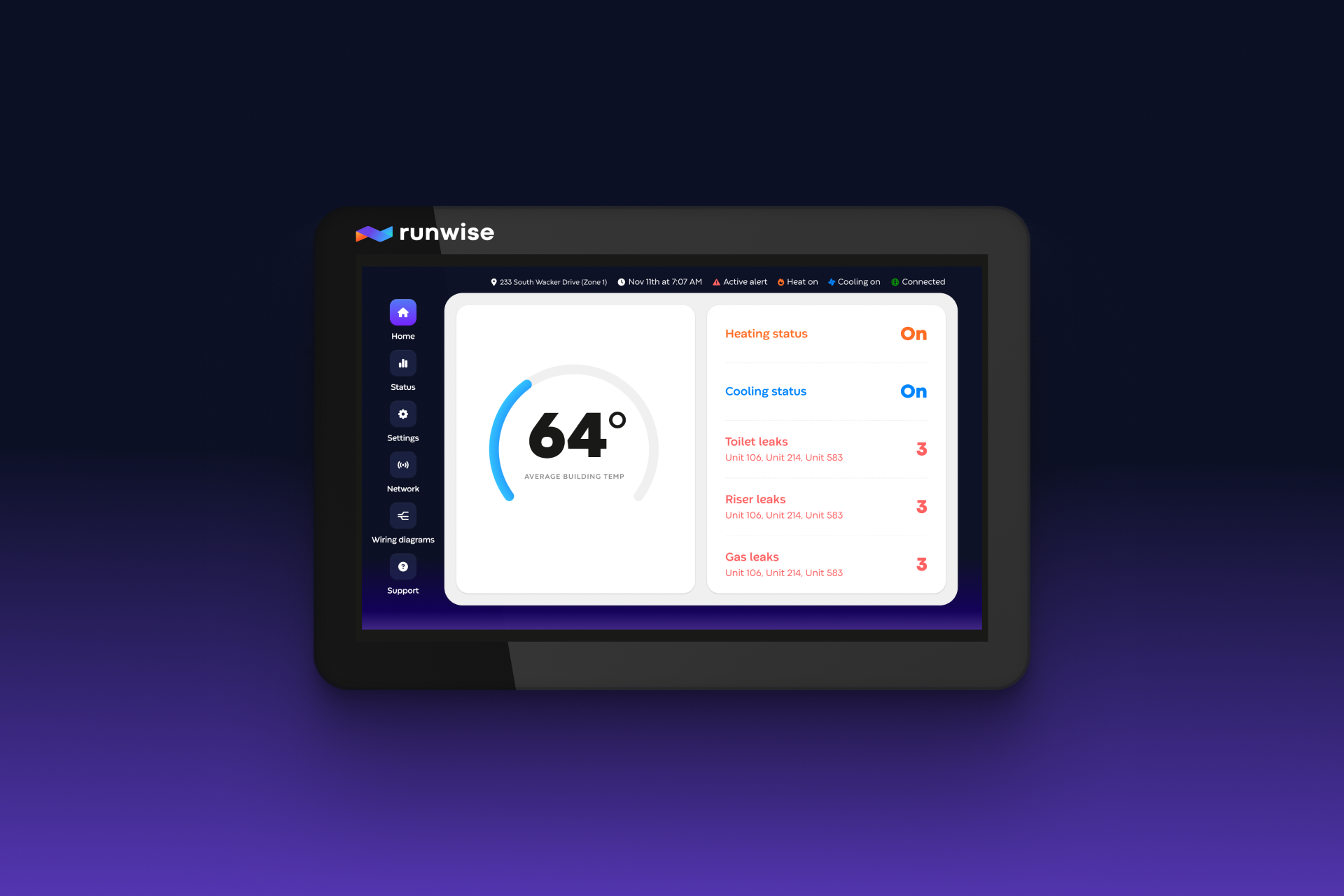
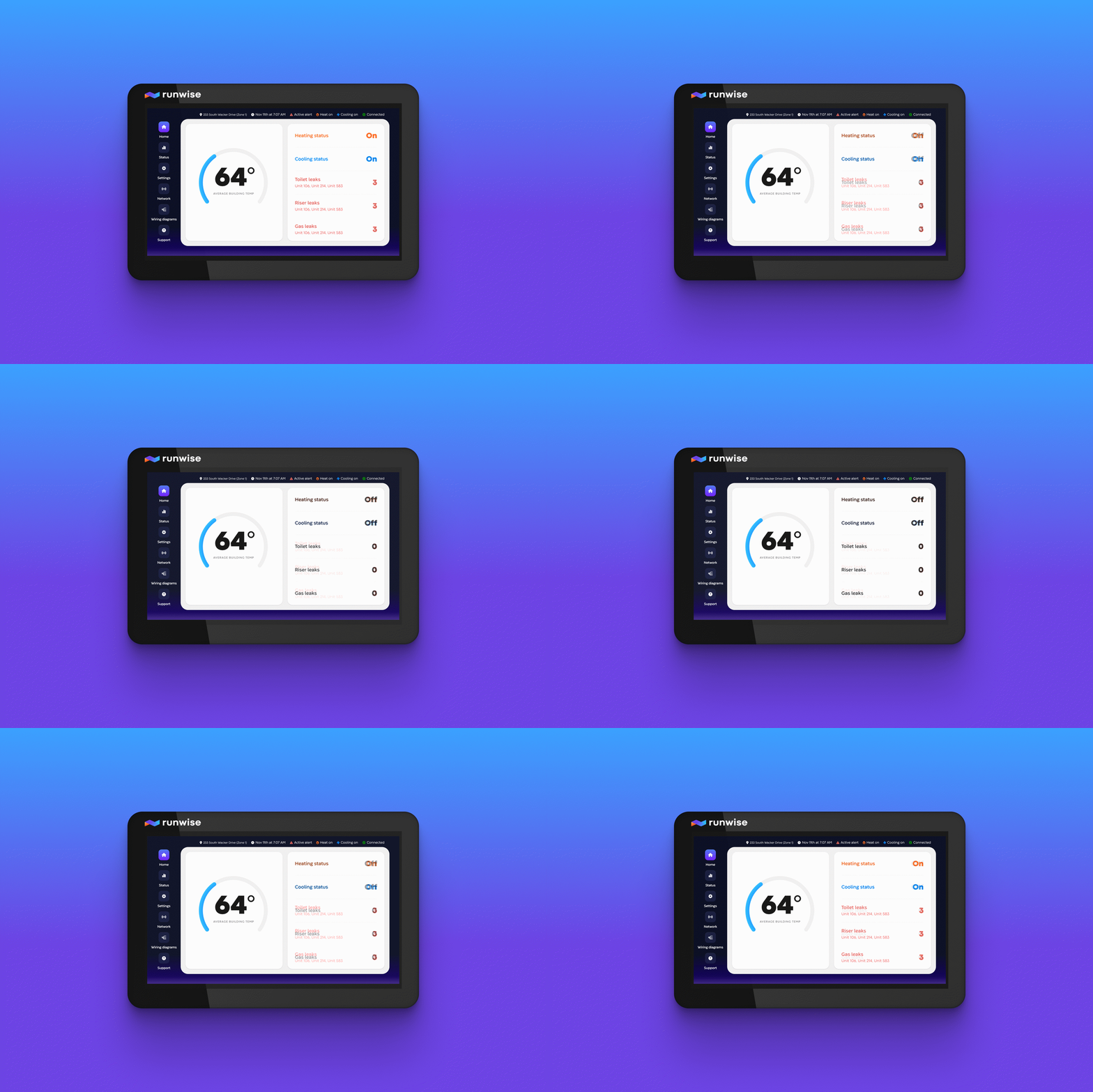
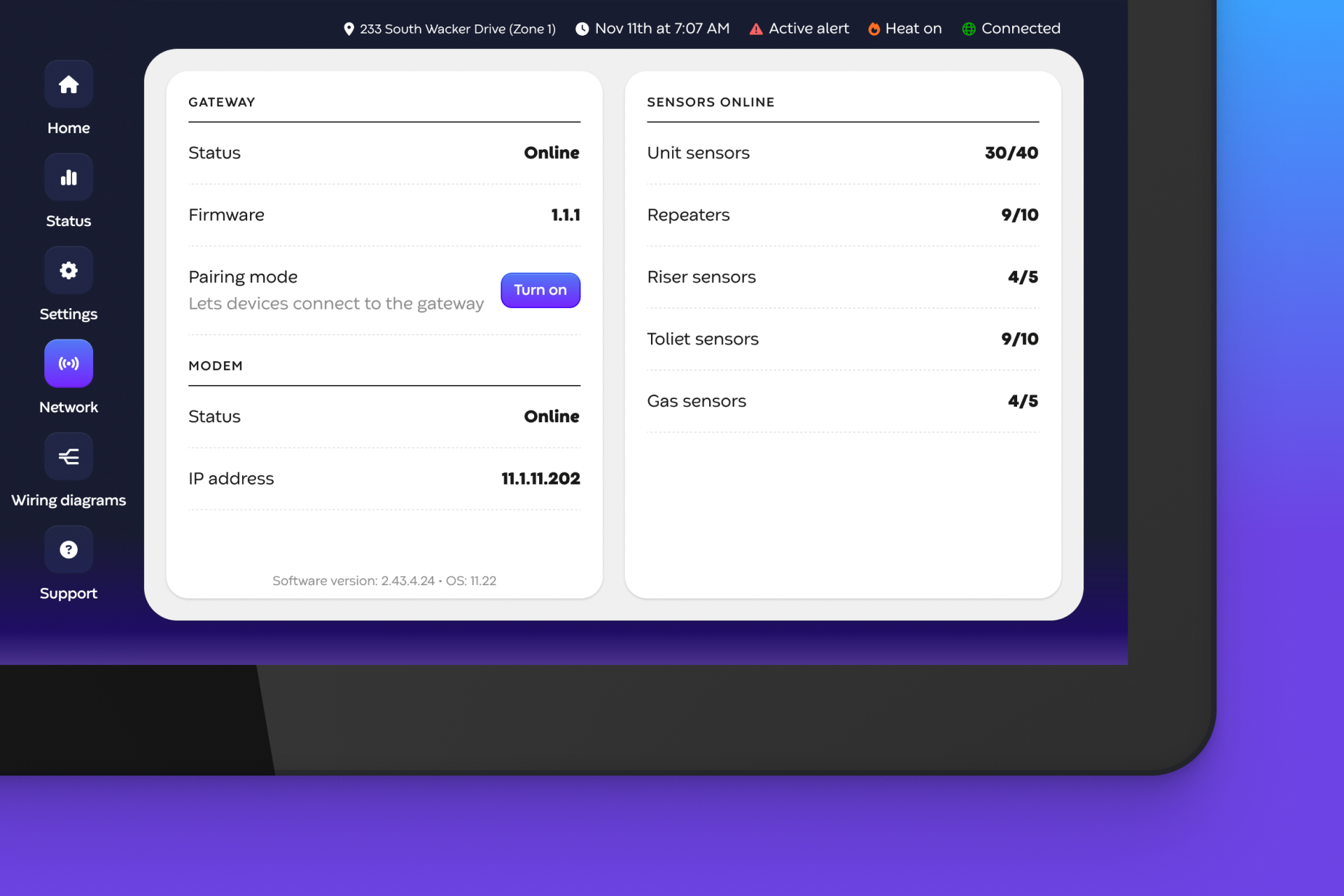
The control opens on an overall system status view: indoor temperature, heating and cooling status, and a live count of any active leaks, each tied to the exact unit. Every reading resolves to a simple on/off and a number, readable from across the boiler room.
The Impact
From a heating only control to a building-wide platform
The Runwise control changed Runwise from a single-purpose heating product into a building-wide smart platform — one screen consolidating heating, cooling, and four safety services across 1,300+ buildings and counting. The proprietary mesh network made it possible at scale, keeping battery-powered devices connected for up to 10 years through pre-war construction with 200% better battery efficiency than competing networks.
The safety services launched on the platform drove a 20% upsell rate on existing Runwise buildings and contributed to $4M+ ARR. Through a more efficient wireless network and hardware design and production efficiencies, it reduced the average cost to install Runwise by 40%, allowing for significantly higher margins from the previous hardware generation.